English


Introduction
Today, the world of finance is changing fast. Therefore, selling loans the traditional way no longer works. Customers now have more choices than ever before. They can easily compare offers online and get instant approvals. So, what makes them trust you?
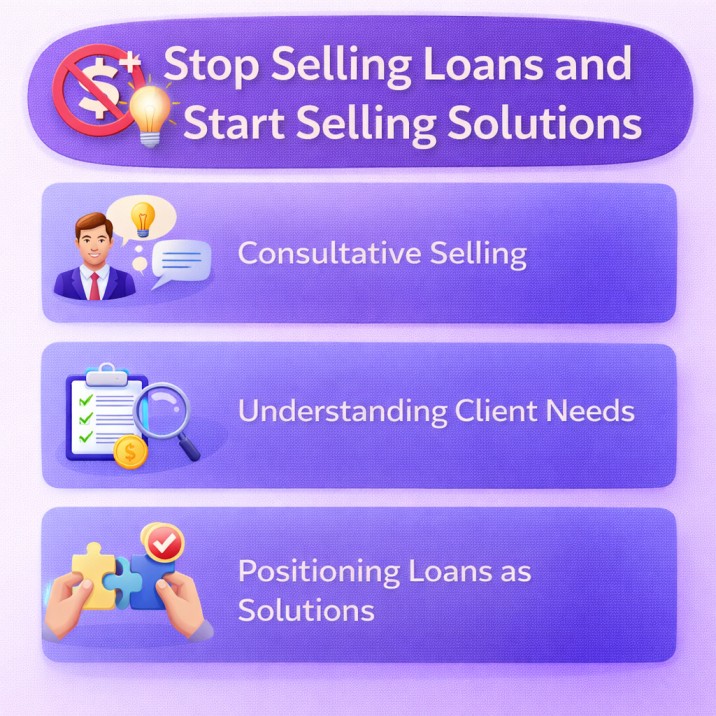
The answer lies in consultative selling. Instead of trying to sell a loan, you should focus on selling solutions. In this approach, you listen carefully, understand what your client truly needs, and then suggest the best loan option. This simple shift builds trust, increases sales, and creates happy lifelong clients. Moreover, it helps you stand out in a crowded market.
What Is Consultative Selling
Simply put, consultative selling means helping people find the right solution rather than just pushing a product. In this kind of selling, your goal is not to sell a loan fast but to solve a client’s problem effectively.
For example, instead of saying, “We have the best loan rates,” you might say, “Let’s understand what you really want to achieve first.” After that, you pick the best loan or product that supports their goal. In other words, you act like a financial guide rather than a salesperson.
As a result, your clients begin to trust you more and refer you to others. Additionally, this approach helps clients make better financial choices.
Why Traditional Loan Selling No Longer Works
In the past, people sold loans mainly based on numbers—interest rates, EMIs, and tenure. However, times have changed. Nowadays, customers want more than just low-interest loans. They want support, advice, and personalised service.
Traditional selling methods don’t build a connection. Instead, they make customers feel like just another number. On the other hand, consultative selling focuses on what the client actually needs. Consequently, clients feel understood, which improves both satisfaction and loyalty.
Furthermore, people no longer decide based only on cost. They also value honesty and helpful guidance. Therefore, if you focus on selling solutions, your chances of success increase greatly.
Difference Between Selling Loans and Selling Solutions
The difference between selling loans and selling solutions is huge. Let’s look at how they compare.
| Aspect | Selling Loans | Selling Solutions |
| Focus | Product details | Client needs |
| Approach | Push the offer | Understand first |
| Communication | One-way talk | Two-way discussion |
| Objective | Close quickly | Solve problems |
| Outcome | One-time sale | Long-term trust |
As shown above, selling solutions makes clients happier. Moreover, it helps you build a brand known for honesty and care.
Understanding Client Needs Before Offering Loans
Before talking about your loan products, take time to listen. Ask simple questions to know why they need money. For instance:
- What goal are you trying to achieve with this loan?
- How soon do you need the funds?
- What do you worry about when borrowing?
By asking such questions, you understand the real reason behind their loan request. Moreover, you show that you care about their financial goals. Eventually, this leads to better recommendations and smoother conversations.
In addition, once clients feel that you understand them, they tend to trust your advice more.
How Consultative Selling Improves Client Trust
Trust is built through understanding and transparency. When you take the time to know your client’s goals, they realise you care about more than just a sale.
For example, if a client is unsure about loan tenure, instead of pushing a longer plan, you explain the pros and cons clearly. Hence, they feel comfortable and confident in their decision.
Moreover, when clients see transparency at every step, they are more likely to recommend you. Over time, this consistency turns into strong, genuine trust — the foundation of every successful business.
Steps to Apply Consultative Selling in Loans
If you want to use consultative selling effectively, follow these simple steps:
- Listen carefully. Try to understand the full picture before mentioning loan options.
- Ask thoughtful questions. Use open-ended ones that let clients share freely.
- Identify goals. Find out why they need the loan and what outcome they expect.
- Recommend wisely. Suggest only what truly fits the client’s needs.
- Explain clearly. Avoid jargon; use simple, easy-to-grasp terms.
- Follow up kindly. Keep in touch after disbursal; small check-ins mean a lot.
Each of these steps ensures that your client always feels valued. Moreover, it increases repeat business and referrals.
Asking the Right Questions of Clients
Asking the right questions helps uncover real needs. Therefore, you must prepare meaningful questions before every conversation.
For example:
- “What financial goal are you hoping to achieve?”
- “Have you compared other options yet?”
- “How do you feel about your current monthly payments?”
These questions open honest dialogue. As a result, you can tailor your advice to match the client’s exact need. Furthermore, you make your client feel comfortable and respected — two things that lead to easy conversions.
Positioning Loans as Financial Solutions
Always remember that clients don’t just buy loans — they buy solutions. So instead of talking about rates or terms, connect the loan to their real-world needs.
For instance:
- Don’t say, “This loan has a 9% interest rate.”
- Instead, say, “This loan can help you expand your business smoothly so you can grow faster.”
Therefore, position your loan as a tool for achieving goals. Moreover, this emotional connection helps clients act faster and feel satisfied after purchase.
Benefits of a Solution-Based Sales Approach
The benefits of selling solutions over loans are many. Let’s explore a few:
- More trust: Clients trust those who solve problems thoughtfully.
- Better conversion rates: When people see clear value, they act quickly.
- Higher client loyalty: Customers return because they feel supported.
- Increased referrals: Satisfied clients tell others about your help.
- Sustainable growth: You build a stable base for long-term success.
In addition, selling solutions helps position you as a market expert rather than just a loan agent.
Common Mistakes in Loan Selling
Even experienced salespeople sometimes repeat common errors. However, these mistakes are easy to fix. Be sure to avoid the following:
- Talking too much and listening too little.
- Offering loans before understanding goals.
- Ignoring emotional triggers.
- Using complex or confusing terms.
- Skipping follow-ups after disbursal.
By correcting these habits, you not only close more deals but also create lasting goodwill.
How to Build Long-Term Client Relationships
Strong client relationships are built on time, trust, and care. Here’s how to strengthen them:
- Communicate often. Keep checking in, even when there’s no immediate sale.
- Add value always. Share useful financial advice or new updates regularly.
- Be honest. Clearly explain all fees and processes upfront.
- Stay available. Be prompt in answering questions or clearing doubts.
Furthermore, remember that every interaction shapes your reputation. Eventually, these small actions turn one-time borrowers into lifetime partners.
Who Should Use Consultative Selling
Consultative selling works for anyone in finance — whether you are a bank officer, loan partner, or independent advisor. In fact, this approach fits any role that requires building client relationships.
Moreover, it suits both small and large businesses because it focuses on understanding, not pressure. As a result, this method improves both client satisfaction and overall business performance.
Conclusion
To sum up, traditional loan selling focuses on numbers, while consultative selling focuses on people. By shifting from selling loans to selling solutions, you change the way clients see you.
Therefore, stop selling just for closing targets — start helping people reach their dreams. Moreover, by listening first and offering meaningful guidance, you’ll build trust that lasts for years. Become a WeRize Partner, and start earning by selling multiple financial products to your customers.
In the end, consultative selling isn’t just a sales method. Instead, it’s a mindset — one that turns ordinary sellers into trusted financial partners.
FAQs
1. What makes consultative selling effective for loan products?
Because it focuses on solving customer problems instead of promoting loan features, it builds trust and satisfaction.
2. How long does it take to learn consultative selling?
It depends on practice. With consistent effort and real conversations, you can master it in a few months.
3. Is consultative selling suitable for all loan types?
Yes. Whether personal, home, or business loans — the approach remains the same: understand needs first, then offer solutions.
4. Does this approach take more time?
At first, yes. But as trust builds, conversions speed up, and repeat clients grow.
5. What’s the biggest mistake to avoid in consultative selling?
Avoid assuming what clients need. Always listen first and confirm before making recommendations.