English


Introduction
Managing money can be difficult when most of your income goes toward EMIs. Still, unexpected expenses can come at any time — a medical bill, a job loss, or a home repair. That’s why an emergency fund is essential, even if you’re already paying EMIs.
Moreover, an emergency fund helps you stay financially prepared. Therefore, it prevents you from borrowing again or using credit cards for emergencies. Building this fund takes patience; however, with the right plan, anyone paying EMIs can do it gradually and smartly.
What Is an Emergency Fund
An emergency fund is a money reserve that you set aside for unexpected expenses. It acts as a safety net during tough times. Instead of using your credit card or taking another loan, you can use this fund to handle emergencies.
Usually, your emergency fund should cover 3 to 6 months of basic living expenses, rent, food, EMIs, and bills. The goal is simple: to avoid financial stress when life throws surprises. In fact, it works as your first line of defense against debt.
Why You Need an Emergency Fund Even with EMIs
Even if you’re paying EMIs, you still need a backup because emergencies don’t wait until your loan ends. For example, if your car breaks down or a medical issue arises, having an emergency fund saves you from more debt.
Furthermore, EMIs tie up a portion of your income every month. So, having an emergency fund ensures you can still pay your EMI even if your income stops suddenly. As a result, it acts like a financial cushion that gives peace of mind.
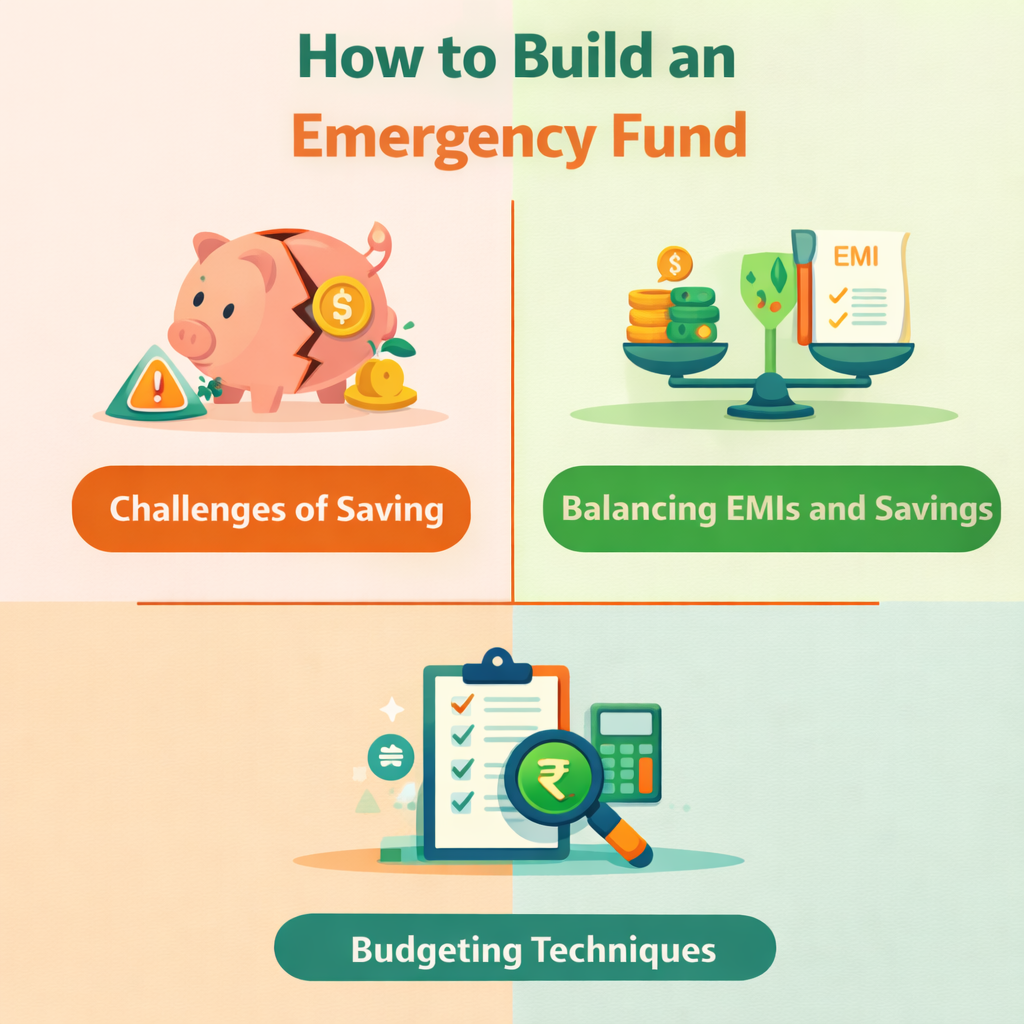
Challenges of Saving While Paying EMIs
Saving while paying EMIs can feel like walking a tightrope. You might feel there’s nothing left after all your bills. Common challenges include:
- High loan EMIs consume a big share of your income
- Rising daily expenses are leaving less room for savings
- Lack of budgeting or financial discipline
- Using credit cards frequently for small purchases
However, even small amounts saved regularly can change the picture over time. The key is consistency and smart money management because little progress adds up.
How Much Emergency Fund Should You Build
Your emergency fund size depends on your monthly expenses and how many people rely on your income. A simple way to calculate it:
| Monthly Expenses (including EMI) | Ideal Emergency Fund Goal |
| ₹20,000 | ₹60,000 – ₹1,20,000 |
| ₹30,000 | ₹90,000 – ₹1,80,000 |
| ₹40,000 | ₹1,20,000 – ₹2,40,000 |
| ₹50,000 | ₹1,50,000 – ₹3,00,000 |
Additionally, think about your job stability, health conditions, and the number of dependents. As you evaluate, start small; yet aim to build enough to cover at least three months of expenses.
Balancing EMIs and Monthly Savings
Balancing EMIs and savings is all about adjusting priorities. You can’t stop paying your loans, but you can still save. Here’s how:
- Always track where your money goes each month.
- Reduce non-essential spending, even if it’s just ₹500 saved.
- Set a fixed savings goal for your emergency fund.
- Treat your savings like an unavoidable EMI, pay it first.
Consequently, when you automate savings, it gets easier to balance loan payments and build funds side by side. Additionally, automation helps you stay disciplined without much effort.
Steps to Start an Emergency Fund with Existing Loans
If you already have loans, starting an emergency fund might feel challenging, but here’s a step-by-step method:
- Review all your EMIs: List each one by amount and tenure.
- Check your income and expenses: Identify unnecessary spending.
- Set a small goal first: Aim for ₹5,000 to ₹10,000 as your initial buffer.
- Automate your savings: Set up a monthly transfer to a separate account.
- Use bonuses wisely: Add extra income like bonuses or cashback to your fund.
Meanwhile, this disciplined approach will build your fund without straining your monthly budget. Therefore, you can stay confident even during unstable times.
Cutting Expenses to Save More Money
Cutting expenses doesn’t always mean giving up everything you enjoy. Rather, it means spending smart. Consider these simple steps:
- Cook at home instead of ordering food frequently.
- Cancel unused subscriptions or mobile apps.
- Compare prices before shopping online.
- Use public transport instead of booking cabs daily.
- Buy grocery items in bulk for discounts.
Even small savings add up over time. In fact, if you save ₹1,000 every week, you’ll have ₹52,000 by the end of the year, enough to strengthen your emergency fund and still manage EMIs comfortably.
Using Budgeting Techniques to Manage EMIs
Budgeting gives you control over your money. To manage both EMIs and savings, follow these techniques:
- 50-30-20 Rule: Spend 50% on needs (rent, EMIs, bills), 30% on wants, and save 20%.
- Zero-Based Budgeting: Assign a purpose to every rupee so none goes unused.
- Envelope System: Keep cash in labeled envelopes — for EMIs, groceries, transport, etc.
Additionally, when you know exactly where your money goes, you naturally find ways to save more. As a result, managing EMIs and savings becomes less stressful.
Where to Keep Your Emergency Fund
Your emergency fund should be easily accessible but not so easy that you spend it casually. The best places are:
- A high-interest savings account
- A liquid mutual fund
- A recurring deposit (RD) for automatic contributions
Instead of locking your emergency fund in fixed deposits with penalties for early withdrawal, keep it liquid. Liquidity is far more useful than high returns during emergencies.
How to Build Emergency Savings Gradually
Building your emergency fund gradually is the smartest way. You don’t need to save everything at once. Instead:
- Start small with 5–10% of your income.
- When your salary increases, raise your savings percentage too.
- Avoid diverting emergency funds for non-urgent purchases.
- Celebrate milestones: for example, your first ₹10,000 saved.
Gradually, your habit will grow into a stable financial cushion. Moreover, each step boosts confidence and keeps you motivated.
Common Mistakes to Avoid
When building an emergency fund, avoid these common mistakes:
- Using credit cards to “save” while paying EMIs
- Keeping funds in risky investments like stocks
- Ignoring small but frequent expenses
- Stopping savings after reaching the first goal
- Borrowing money for luxuries while ignoring your fund
In short, an emergency fund is your insurance against uncertainty. Meanwhile, it protects your peace of mind. It’s not meant for vacations or shopping, but for real emergencies only.
Tips to Stay Consistent with Savings
Consistency is what turns small savings into a strong safety net. Try these tips:
- Automate your transfer every month.
- Avoid dipping into the fund for non-emergencies.
- Keep motivating yourself by tracking progress.
- Review your fund quarterly to ensure it’s growing.
- If you use any portion, rebuild it quickly.
Therefore, think of your emergency fund as your backup plan for life’s surprises. Moreover, the more committed you are, the more secure your future becomes.
Who Should Focus on Emergency Fund Planning
Everyone needs an emergency fund, but certain people should prioritize it more:
- Salaried individuals with high EMIs
- Freelancers or gig workers with unstable income
- Families with dependents
- People planning major life changes, like marriage or buying a house
Additionally, if you fall into one of these categories, building an emergency fund should be your top money goal. In fact, it’s the foundation for long-term financial stability.
Conclusion
Managing EMIs and building an emergency fund may seem tough, but it’s absolutely possible. With clear goals, smart budgeting, and consistent savings, you can create a financial cushion step by step. Start investing with WeRize and secure your emergency funds in safe investment options.
Above all, remember emergencies never come with a warning. But being prepared ensures you stay calm and financially secure, no matter what happens.
Even if you start with ₹500 or ₹1,000, it’s progress. Eventually, your regular efforts will grow into a powerful financial safety net. The key, therefore, is to start today and stay disciplined.
FAQs
1. Can I build an emergency fund while paying multiple EMIs?
Yes. Start small and save regularly. Even tiny contributions matter when done consistently.
2. How big should my emergency fund be?
Ideally, 3 to 6 months of your total expenses, including EMIs.
3. Should I stop investing to build my emergency fund first?
It’s better to balance both. Continue minimal investments but prioritize your emergency fund until it reaches a basic level.
4. Can I use my emergency fund for planned expenses?
No. Use it only for true emergencies such as job loss, medical expenses, or urgent repairs.
5. Where should I store my emergency money?
In a savings account or liquid fund, places that are safe and easy to access quickly.