English


Introduction
The way Indians borrow money is changing rapidly. Earlier, people had to visit banks and fill out many forms. Today, because of technology, loans happen online in just a few clicks. This process is called digital lending.
However, as more loan apps appeared, some customers faced issues like hidden fees or delayed payouts. So, the Reserve Bank of India (RBI) decided to set clear rules. As a result, these new digital lending guidelines help make online loans safer, fairer, and more transparent.
Therefore, if you are a Direct Selling Agent (DSA), you should understand how these rules affect your work, your commissions, and your customers.
What Is Digital Lending
Digital lending simply means giving loans through apps or websites instead of in branches. People can apply, upload documents, and get money — all online.
Because of this, the process is quick, simple, and accessible. Moreover, even people in small towns can easily get loans.
However, every digital lending platform must follow the RBI’s rules so that there are no hidden charges or confusion. For instance, if a borrower sees a ₹1 lakh loan approved, the same ₹1 lakh should reach their account — nothing less.
Role of RBI in Digital Lending
The RBI is India’s top banking authority. It controls how money flows in the economy and protects people using financial services.
In digital lending, RBI plays an important role because, unlike traditional banks, many loan apps are run by private companies. Therefore, strict rules are needed to prevent misuse and fraud.
Furthermore, RBI ensures lenders and DSAs treat customers fairly. So, when the RBI updates guidelines, everyone must follow them carefully to avoid mistakes and penalties.
Overview of New RBI Guidelines
The 2026 RBI digital lending guidelines were introduced mainly to protect borrowers. They aim to stop unfair deduction practices and bring clarity to commissions and loan disbursals.
According to the new rules, every loan-related payment should go directly between borrower and lender accounts. This means DSAs and intermediaries cannot touch or hold any portion of the loan funds.
In addition, RBI asked digital platforms to be more transparent with interest rates, processing fees, and payouts. As a result, customers can see how their loan amount moves and trust digital lenders more easily.
Why the RBI Introduced Digital Lending Rules
Earlier, many small loan apps charged hidden fees or used unclear terms. Because of that, customers often complained. In some cases, DSAs did not explain charges correctly.
Therefore, the RBI introduced a fresh set of rules to fix all these problems. Moreover, they make all payouts and commissions visible and fair.
Through these guidelines, RBI wants every person borrowing digitally to feel safe and informed. It also helps DSAs work smoothly, because now every payout will happen transparently.
Key Changes in Digital Lending Payouts
Let’s look at the major differences before and after the new RBI rules:
| Aspect | Earlier Process | New Rule (2026) |
| Loan Fund Flow | Borrower → DSA → Lender | Borrower ↔ Lender (Direct) |
| DSA Commission | Deducted from the loan amount | Paid separately by the lender |
| Data Sharing | Often across apps | Needs borrower’s consent |
| Payout Timeline | Not fixed | Standardized by the lender |
| Clarity of Charges | Sometimes hidden | Must be shown before loan approval |
As you can see, the new system removes confusion. Additionally, it helps DSAs maintain clarity and professionalism.
Impact on DSAs and Loan Partners
These changes affect DSAs in several ways. First, they no longer handle loan payouts themselves, which reduces their risk. Second, commissions have become fully transparent and traceable.
Moreover, DSAs will notice that lenders now pay directly into their registered accounts instead of adjusting from the borrower’s loan. Therefore, any misunderstanding about deductions will vanish.
On the other hand, DSAs must now maintain proper records and follow compliance standards more carefully. In the long run, this discipline builds customer trust and a better industry reputation.
How Payout Structures Are Affected
Earlier, DSAs often earned their commission by deducting it from the final loan amount disbursed to borrowers. However, as per the new RBI guidelines, this practice must stop immediately.
Now, commissions are sent separately by the lender after loan approval. As a result, customers receive the full loan amount they were promised. At the same time, DSAs get a clean record of earnings without any deductions or confusion.
Furthermore, since payments come directly from the lender, DSAs can track them more easily. Thus, payout disputes will reduce significantly.
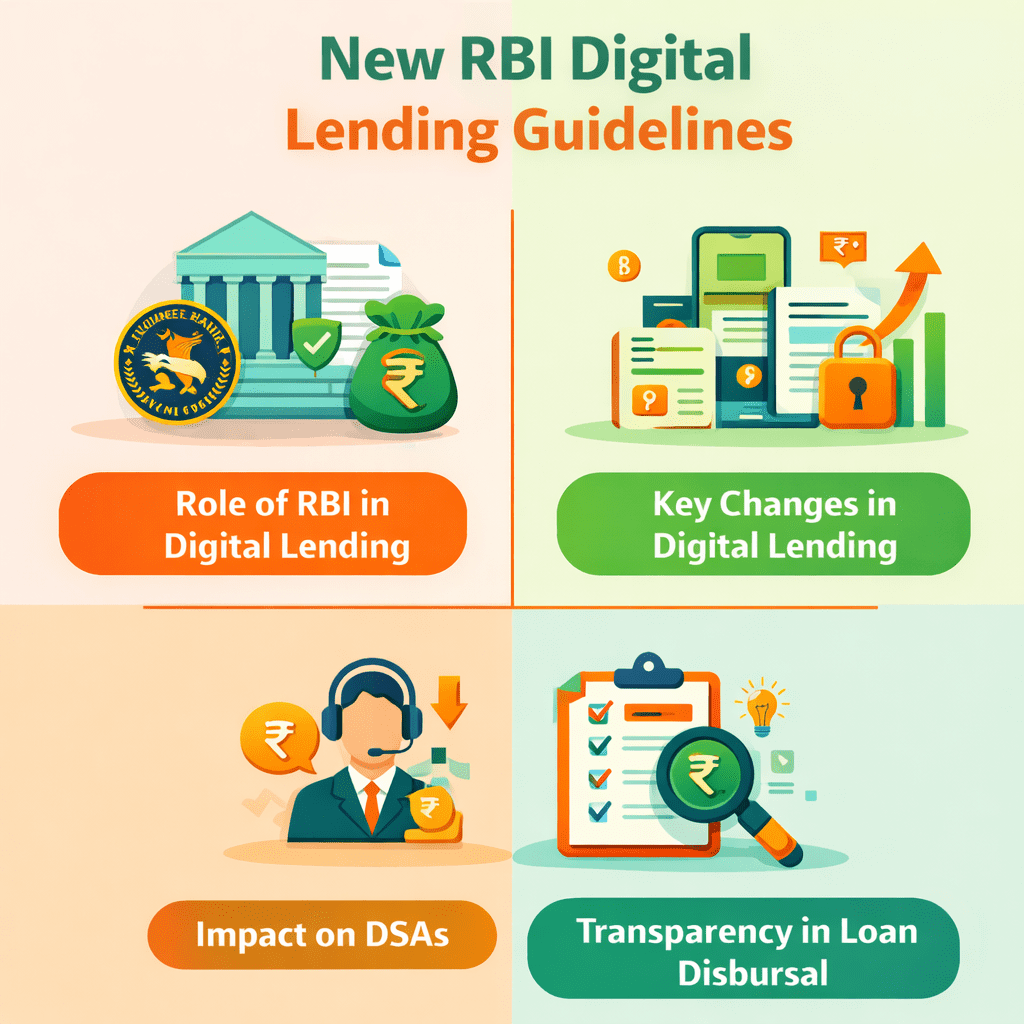
Transparency in Loan Disbursal and Charges
Transparency means showing everything clearly. So now, every borrower should know exactly how their loan works — from interest rates to total repayment.
Because of the rules, lenders and DSAs must give a Key Fact Statement (KFS) before loan approval. This statement includes:
- Loan amount
- Annual interest rate
- Processing fees
- Commission details
- Repayment time
Additionally, borrowers must also receive this same data through email or SMS. Therefore, customers can double-check their loan details anytime. DSAs should encourage people to read this before applying.
Compliance Requirements for DSAs
To continue working safely under the RBI framework, DSAs must follow these compliance rules carefully:
- Work only with RBI-approved banks or NBFCs.
- Never receive loan money into personal accounts.
- Keep all commission reports digital and updated.
- Ensure borrower consents are verified properly.
- Follow data privacy guidelines strictly.
- Report suspicious activity immediately to the lender.
Moreover, DSAs must regularly check if their lending partners follow the RBI’s latest circulars. Therefore, staying alert protects both parties.
Dos and Don’ts for DSAs Under New Guidelines
Dos
- Always explain loan charges completely before approval.
- Help borrowers understand interest rates and repayment dates.
- Use lender-approved digital tools for every transaction.
- Keep payout proofs safe and organized.
- Update compliance records every month.
Don’ts
- Don’t handle loan money in your own account.
- Never hide any charges or deductions.
- Don’t share customer data without permission.
- Avoid selling loans from apps that are not RBI-regulated.
Following these dos and don’ts makes your work smoother and keeps you fully compliant.
Common Mistakes to Avoid
Even now, some DSAs make small errors that cause big trouble. Let’s go through them:
- Using only verbal consent instead of digital confirmation forms.
- Forgetting to update their payout process.
- Assuming all loan apps are approved without checking.
- Delay in explaining processing fees properly.
Therefore, DSAs must stay alert and careful. Moreover, cross-check information whenever possible to ensure smooth communication and compliance.
How to Stay Updated with RBI Regulations
RBI frequently updates its circulars and instructions on its official website. So, DSAs should keep checking it once a week.
Additionally, joining fintech webinars or DSA associations helps. Many lenders also send update newsletters, so make sure you subscribe.
Because the digital lending space changes fast, staying informed saves time, prevents confusion, and avoids penalties. Moreover, it builds your confidence as a trusted advisor.
Who Should Follow These Guidelines
Everyone in the digital lending chain must follow these new rules, including:
- Banks offering online loans
- NBFCs and Fintech partners
- Lending Service Providers (LSPs)
- DSAs and referral agents
- Loan marketing platforms
Therefore, you don’t have to handle actual money flow to be governed by these guidelines. Even if your role involves promoting loans, awareness of these rules keeps your marketing ethical and precise.
Conclusion
To sum up, RBI’s new digital lending guidelines bring clarity, security, and fairness to India’s loan market. DSAs should see these updates not as restrictions but as growth opportunities.
Because of transparent payouts and cleaner data handling, borrowers will start trusting DSAs more. Moreover, with proper compliance, your business will run more smoothly and faster. Now, join WeRize as a Partner and start your own DSA business. Sell loans and savings financial products and increase your earning potential.
Hence, by following these RBI rules sincerely, every DSA will build a strong long-term career in the digital lending network.
FAQs
1. When did the new RBI digital lending guidelines come into effect?
They became effective in early 2026 across all digital lending platforms in India.
2. Can DSAs still earn commissions under the new rules?
Yes, they can. However, commissions must now come directly from the lender, not from deductions in loan amounts.
3. Are NBFC loan apps covered under these guidelines?
Yes. All NBFCs and fintech apps offering digital loans are covered.
4. Are these rules the same for business and personal loans?
Most key payout rules are the same, but individual terms may differ based on the loan type.
5. How can DSAs prove compliance?
They should maintain digital consent proofs, payout records, and follow lender‑issued communication formats.