English


Introduction
In 2026, inflation in India became part of daily life. You notice it when you shop for groceries, pay rent, or fill your fuel tank. Prices seem to rise everywhere.
Inflation means your money doesn’t go as far as before. For example, if you used to spend ₹25,000 a month, now you might need ₹28,000 for the same things. However, with smart money habits, you can still manage inflation easily.
Therefore, this blog will explain what inflation means, how it affects your personal finances, and simple ways to cope with it.
What Is Inflation
Inflation is the rise in the prices of goods and services over time. As a result, the value of money keeps decreasing.
For example, if milk cost ₹50 per litre last year and now costs ₹55, that’s inflation.
It happens for several reasons. Sometimes, production costs rise, or supply becomes limited. Meanwhile, people still demand the same goods, pushing prices upward.
The Reserve Bank of India (RBI) controls inflation by adjusting interest rates. Overall, a small level of inflation is normal, but too much can harm your finances.
Why Inflation Matters in Personal Finance
Inflation doesn’t just affect business — it also affects everyone’s personal finances.
- It reduces what your money can buy.
- It slows down the growth of your savings.
- Furthermore, it raises loan interest rates.
- It also changes investment returns.
Consequently, even if your salary increases a little, prices often rise faster. So, real income feels lower despite a pay hike.
This is why inflation planning is essential for stable finances.
Current Inflation Trends in India in 2026
In 2026, India’s inflation rate is around 5.8%, which is above the RBI’s comfort zone of 4%. In fact, food and fuel are two major reasons for this rise.
Here’s a table showing trends across different sectors:
| Sector | Average Price Growth (2026) | Main Reason |
| Food & Beverages | 7.2% | Less rain, higher transport cost |
| Fuel & Energy | 6.8% | Global oil price rise |
| Housing & Rent | 5.1% | Urban demand and property cost |
| Health & Education | 4.6% | Service cost increase |
| Clothing & Footwear | 3.9% | Import and production costs rise |
Altogether, these trends show inflation touching all areas of life, from essentials to non-essentials.
How Inflation Affects Daily Expenses
Inflation increases daily expenses. You feel it in the supermarket, petrol station, and school bills. Because of this, your monthly budget grows even if your income stays the same.
To illustrate, if you previously spent ₹25,000, you might spend ₹28,000 for the same goods. In addition, small services like delivery or maintenance also become costlier.
Therefore, you should track expenses carefully, cut unnecessary spending, and try using offers or discounts whenever possible.
Impact of Inflation on Savings and Investments
Inflation can quietly eat your savings. For example, if inflation is 6% but your savings yield only 3%, your real return is negative.
Hence, don’t keep too much money idle in your savings account. Instead, invest in better options like mutual funds, real estate, or inflation-protected bonds.
Moreover, a balanced mix of assets helps you earn steady returns and beat inflation effectively.
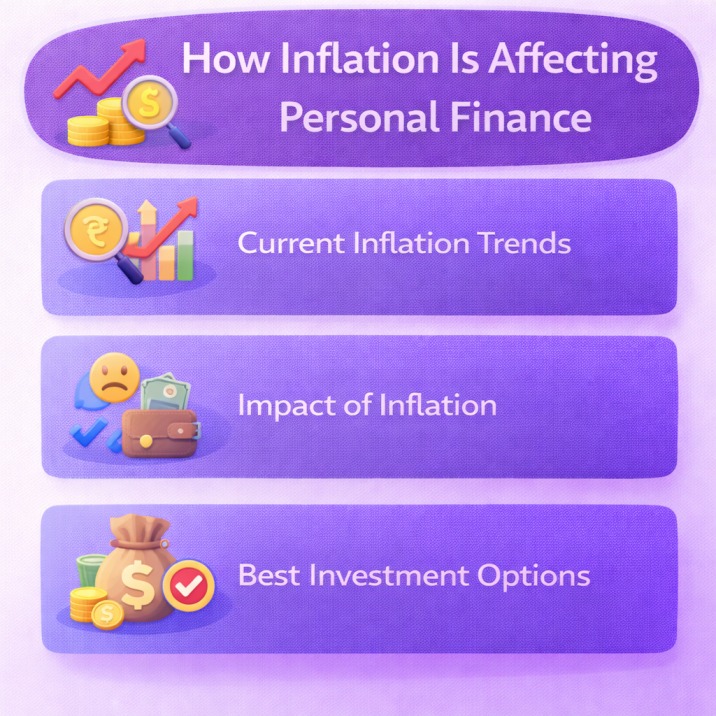
Inflation and Rising Cost of Living
The cost of living rises as inflation increases. Groceries, rent, and fuel all add up quickly. Although a pay raise helps, if prices grow faster, you’ll still feel stretched.
For instance, if your salary rises by 5%, but inflation is 6%, your spending power drops slightly.
Therefore, always factor inflation into your financial planning and add a little more to your savings every year to stay prepared.
Also Read:https://deliverables.kosmi.in/explaining-inflation-to-fd-customers/
Effect of Inflation on Loan Interest Rates
When inflation goes up, banks and the RBI often raise interest rates. Consequently, loan EMIs also increase.
On the other hand, savers may benefit because banks offer higher interest rates on fixed deposits.
Meanwhile, borrowers should check their loan type — fixed or floating — and consider switching if better options appear.
Eventually, understanding loan rate changes can save you from paying more in the long run.
How Inflation Impacts Fixed Income Investments
Fixed-income investments like FDs and bonds give steady returns, but inflation can reduce their real value.
For example, if you earn 6% interest and inflation is also 6%, your money doesn’t grow in real terms.
Therefore, balance safety with growth. While FDs offer security, they also offer flexible options like mutual funds or dividend-paying stocks for better inflation protection.
Simple Ways to Manage Money During Inflation
You cannot control inflation, but you can control your spending habits.
Here are easy money tips:
- Firstly, make a new budget based on current prices.
- Secondly, cut all unnecessary costs and save wherever possible.
- In addition, find side income sources like freelancing.
- Furthermore, check your insurance coverage because medical costs keep rising.
- Meanwhile, invest smartly in inflation-beating options.
- Finally, clear high-interest loans quickly to reduce your burden.
Altogether, these small steps create a big difference in how inflation affects you.
Best Investment Options to Beat Inflation
During inflation, some investments perform better. Here are options worth considering:
- Equity Mutual Funds – grow faster over time.
- Gold and Digital Gold – hold value steadily.
- Real Estate – prices move upward with inflation.
- Inflation-Linked Bonds – return adjusts with inflation.
- Hybrid Funds – offer both safety and growth.
Additionally, diversify your portfolio. Because of this, you’ll reduce risk and secure better returns even when the economy slows.
Common Mistakes to Avoid During High Inflation
Many people make money mistakes during inflation.
For instance, they keep too much cash in low-interest accounts or ignore rising costs.
Moreover, some take unnecessary loans or avoid investing due to fear. Eventually, these habits reduce long-term wealth.
Therefore, review your spending and plan sensibly to stay financially strong.
Who Is Most Affected by Inflation
Not everyone feels inflation equally. Usually, people with fixed incomes, such as retirees and salary earner,s suffer the most.
Meanwhile, business owners or investors can raise prices or earn higher profits.
Thus, having multiple income sources helps you handle inflation better and reduce stress during tough times.
Conclusion
Inflation in India in 2026 is affecting everyone’s daily life. Prices of goods and services have increased almost everywhere. Nevertheless, you can still stay financially stable with a good plan.
In short, track your expenses, invest wisely, and avoid unnecessary debt. As a result, inflation becomes easier to manage. Despite the growing inflation every year, if you are looking for the best and safest investment options, try WeRize investment products.
Remember: you can’t stop inflation, but you can make smart financial choices to protect your future.
FAQs
1. What is the main cause of inflation in India in 2026?
Higher fuel prices, supply issues, and global economic slowdowns have caused inflation to rise.
2. How does inflation reduce spending power?
Because prices rise while income may not, reducing what you can buy with the same money.
3. What is a good investment during inflation?
Equity mutual funds, gold, and real estate often perform well during inflation.
4. Should I keep money in fixed deposits during inflation?
Yes, but only partly. Diversify into assets that can grow faster than inflation.
5. How can I protect my daily budget from high inflation?
Track spending, cut non-essentials, increase income sources, and plan monthly budgets carefully.